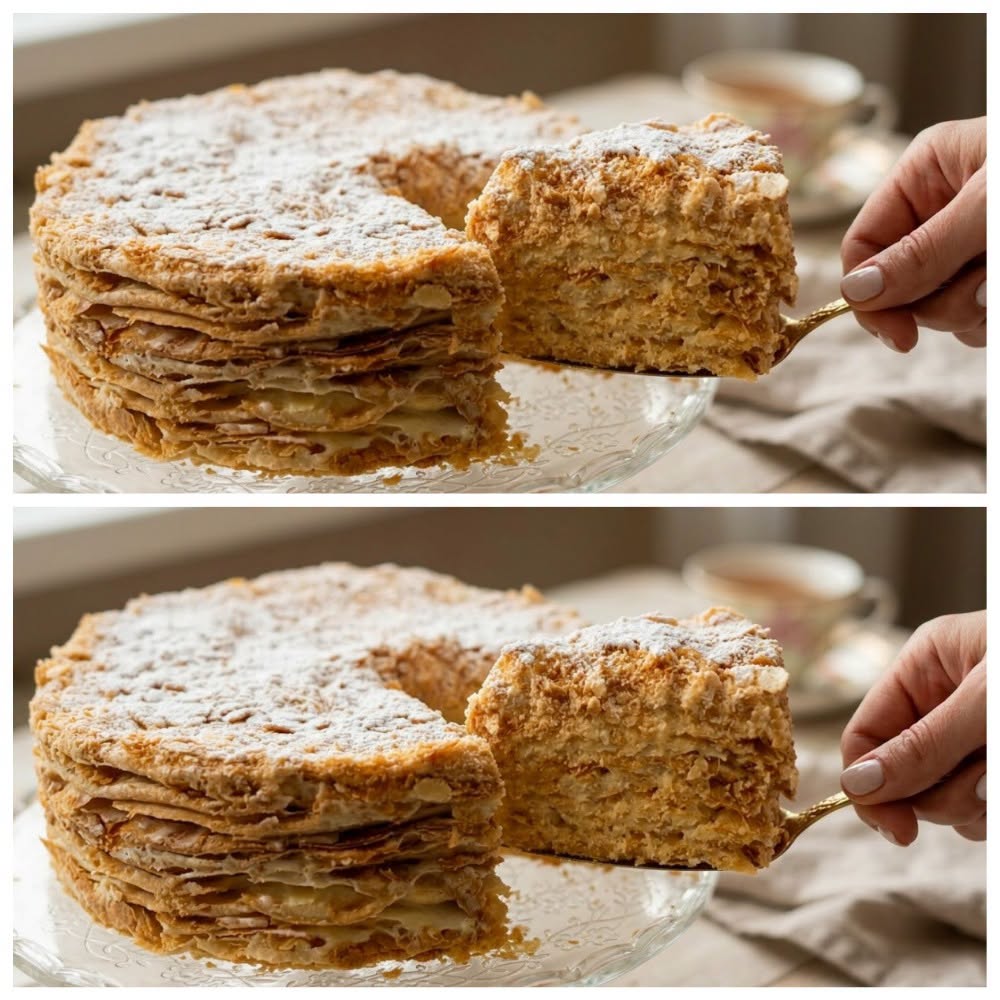
- Not Just a Cake, but Layers of Bliss: Childhood Napoleon with Grated Butter and Condensed Milk Cream
- Why Childhood Napoleon Cake Is So Special
- What Makes This Napoleon Different?
- Ingredients for Homemade Napoleon Cake
- Flour
- Cold Butter
- Eggs
- Dairy Ingredient
- Vinegar or Lemon Juice
- Sweetened Condensed Milk
- Butter for the Cream
- How to Make the Grated-Butter Napoleon Dough
- Why Grating Cold Butter Works
- Forming the Dough
- Dividing the Dough into Layers
- Rolling the Napoleon Layers
- Baking the Layers
- Preparing the Condensed Milk Cream
- The Secret to Smooth Napoleon Cream
- Assembling the Napoleon Cake
- The Classic Napoleon Crumb Decoration
- Why the Cake Needs to Rest
- The Difference Between Fresh and Overnight Napoleon
- How to Cut Napoleon Cake Without Crushing It
- Why the Layers Should Be Thin
- Common Mistakes When Making Napoleon Cake
- The Dough Is Too Hard
- The Butter Melts Before Baking
- The Layers Become Too Dark
- The Cream Is Runny
- The Cake Is Too Dry
- The Cake Falls Apart
- Can You Use Store-Bought Puff Pastry?
- Can You Make Napoleon Without a Special Cake Pan?
- Can the Cream Be Made Less Sweet?
- Vanilla Condensed Milk Cream
- Coffee Napoleon Variation
- Chocolate Napoleon Variation
- How to Store Napoleon Cake
- Can You Freeze Napoleon Cake?
- What to Serve with Napoleon Cake
- Why Homemade Napoleon Is Worth the Effort
- A Perfect Make-Ahead Dessert
- Why This Recipe Brings Back Childhood Memories
- Frequently Asked Questions
- What is the secret to flaky Napoleon layers?
- Why do you grate the butter?
- Can I use margarine instead of butter?
- How long should Napoleon cake rest?
- Why is my Napoleon hard?
- Can I make the layers ahead?
- Can I make the cream ahead?
- Can I use boiled condensed milk?
- Is Napoleon better the next day?
- How should I decorate it?
- Final Thoughts
- Wikipedia Links for Common Kitchen Ingredients
- Recommended Recipes
Not Just a Cake, but Layers of Bliss: Childhood Napoleon with Grated Butter and Condensed Milk Cream
Some desserts are remembered not because they were complicated, but because they were made with simple ingredients and filled the entire kitchen with an unforgettable aroma.
Childhood Napoleon cake is exactly that kind of dessert.
Thin, delicate layers of pastry, a generous creamy filling, the rich flavor of butter and sweet condensed milk — this is a combination that immediately brings back memories of homemade celebrations, family gatherings and cakes prepared long before modern shortcuts became popular.
This nostalgic version of Napoleon cake has one particularly interesting technique: the butter is grated instead of simply softened or melted. The grated butter is incorporated into the flour to create a tender, flaky texture that practically melts in the mouth.
The cream is equally simple. Instead of complicated pastry creams or expensive ingredients, it relies on sweetened condensed milk and butter, creating a rich, smooth filling that gradually softens the pastry layers as the cake rests.
The result is a dessert that is delicate, airy and wonderfully crumbly when freshly assembled, but becomes beautifully tender after several hours in the refrigerator.
If you have ever wondered how to make an old-fashioned Napoleon cake with condensed milk cream, this recipe is exactly the kind of traditional-inspired dessert worth saving.
Why Childhood Napoleon Cake Is So Special
Napoleon cake has been prepared in countless ways.
Some versions use puff pastry.
Others involve homemade dough rolled into extremely thin layers.
Some recipes use custard cream, while others use buttercream, sour cream or condensed milk.
But the homemade version many people remember from childhood has a special character.
It is not necessarily perfectly symmetrical.
The layers may be slightly uneven.
Crumbs may fall onto the plate.
The cream may slowly soften the pastry overnight.
And that is precisely what makes it feel homemade.
This recipe focuses on that nostalgic experience.
The dough is made using simple ingredients, with cold butter grated directly into the flour.
The layers are rolled thin, baked until lightly golden and then covered generously with condensed milk cream.
Once assembled, the cake needs time to rest.
This resting period is essential because the cream slowly penetrates the pastry layers, transforming them from crisp and crumbly into tender, delicate layers.
What Makes This Napoleon Different?
The most distinctive part of this recipe is the use of grated butter.
Instead of cutting cold butter into cubes and working it into the flour, you grate it.
This distributes small pieces of butter throughout the flour.
When the dough is rolled and baked, the butter creates separation between the layers.
That is one of the secrets behind the light, flaky texture.
The second important feature is the cream.
Sweetened condensed milk combined with butter creates an exceptionally rich filling with a caramel-like sweetness.
The cream is simple enough for a beginner baker but produces a luxurious result.
Together, the pastry and cream create the classic contrast that makes Napoleon cake so irresistible.
Ingredients for Homemade Napoleon Cake
The ingredient list is surprisingly simple.
Flour
All-purpose flour provides the structure for the pastry layers.
The exact amount can vary depending on the size of the eggs, the moisture in the dairy ingredients and the type of flour used.
The goal is to create a soft dough that can be rolled thin without becoming excessively sticky.
Avoid adding large amounts of flour simply because the dough feels slightly soft.
Too much flour can make the finished layers hard rather than tender.
Cold Butter
Butter is essential.
For this particular method, cold butter is grated directly into the flour.
It should remain cold while you work.
If the butter becomes soft and melts into the flour before baking, the layers may not separate as well.
For this reason, it is often useful to chill the butter thoroughly before grating it.
Eggs
Eggs help bind the dough and contribute to its structure.
Use fresh eggs at room temperature unless the recipe specifically requires otherwise.
Dairy Ingredient
Depending on the traditional variation you follow, sour cream, water or another dairy ingredient may be used in the dough.
A small amount can help create a pliable pastry that is easy to roll.
Vinegar or Lemon Juice
Some Napoleon dough recipes use a small amount of vinegar or lemon juice.
The acidity can help create a more tender pastry and improve the dough’s texture.
Sweetened Condensed Milk
This is the star of the cream.
Sweetened condensed milk provides sweetness and a concentrated dairy flavor.
It creates a rich filling without requiring a complicated custard.
Butter for the Cream
Softened butter is beaten together with condensed milk until smooth and creamy.
The butter should be soft enough to whip but not melted.
How to Make the Grated-Butter Napoleon Dough
The dough is where the magic begins.
Start by preparing the flour.
Place it in a large mixing bowl.
Make sure you have enough space to work comfortably.
Take the cold butter directly from the refrigerator and grate it using the large holes of a box grater.
As you grate, add the butter gradually to the flour.
You can lightly toss the butter with flour as you go.
This prevents the shreds from sticking together.
The mixture should begin to resemble coarse crumbs.
Do not knead it aggressively.
The small pieces of butter are exactly what you want.
They will create the flaky texture later.
Why Grating Cold Butter Works
Grating butter may seem unusual, but it is an incredibly practical technique.
When cold butter is grated, it becomes distributed throughout the flour in many small pieces.
This means you do not have to spend as much time cutting the butter into the flour.
More importantly, the butter remains in small distinct pieces.
During baking, the moisture in the butter turns into steam.
That steam helps create separation between layers of dough.
This contributes to the characteristic flaky structure.
The technique is similar in principle to methods used for pastry and biscuits, but it is particularly convenient for home bakers.
Forming the Dough
Once the grated butter and flour have been combined, add the remaining dough ingredients.
Mix gently.
The dough should come together without requiring excessive kneading.
If the mixture is too dry, add the liquid component gradually.
If it is too sticky, add a small amount of flour.
Do not try to make it perfectly smooth by kneading for a long time.
A slightly rough dough can still produce beautifully flaky pastry.
Once the dough comes together, wrap it and refrigerate it.
Chilling is important because it allows the butter to firm up again.
Dividing the Dough into Layers
After chilling, divide the dough into several equal portions.
The exact number depends on the size of the cake you want to make.
More portions mean more layers and a taller cake.
Fewer portions create thicker pastry layers.
For a classic Napoleon appearance, aim for multiple thin layers.
Try to divide the dough evenly so the finished cake has a balanced structure.
Keep the portions you are not currently rolling in the refrigerator.
This prevents the butter from becoming too soft.
Rolling the Napoleon Layers
This is probably the most time-consuming part of the recipe, but it is also where you can achieve the characteristic delicate texture.
Lightly flour your work surface.
Take one piece of chilled dough.
Roll it as thinly as possible without tearing it.
Do not worry if the edges look imperfect.
The layers can be trimmed after baking or before baking depending on your preferred method.
If you want a perfectly shaped cake, use a plate or cake ring as a guide.
Save the trimmed pieces.
They can be baked and crushed into crumbs for decorating the finished cake.
This is a classic and practical way to use every part of the pastry.
Baking the Layers
Preheat the oven thoroughly before baking.
Place each rolled layer on a baking sheet.
Pierce the dough lightly with a fork.
This helps reduce excessive bubbling during baking.
Bake until the layer becomes lightly golden.
Do not allow it to become very dark.
The goal is a crisp, delicate pastry with a golden color.
Because the layers are thin, they can bake quickly.
Watch them carefully toward the end.
One minute can make a noticeable difference with very thin pastry.
Preparing the Condensed Milk Cream
While the pastry layers cool, prepare the cream.
The process is simple.
Place softened butter in a mixing bowl.
Beat it until light and creamy.
Gradually add sweetened condensed milk.
Continue mixing until the cream becomes smooth and uniform.
Adding the condensed milk gradually is important.
If you add everything at once, the mixture may become uneven.
The final cream should be thick enough to spread but soft enough to penetrate the pastry layers.
The Secret to Smooth Napoleon Cream
The temperature of the ingredients matters.
The butter should be soft enough to beat.
The condensed milk should ideally be at a similar temperature.
If the butter is very cold and the condensed milk is warm, the mixture can become difficult to emulsify.
Allow both ingredients to reach a similar temperature before beginning.
If the cream appears slightly separated, continue beating.
In many cases, it will become smooth again.
Avoid melting the butter.
Melted butter will not whip into the same light, creamy consistency.
Assembling the Napoleon Cake
Once the pastry layers have cooled and the cream is ready, assembly begins.
Place the first pastry layer on a serving plate.
Spread a thin but generous layer of cream over the surface.
Place the next pastry layer on top.
Press very gently.
You want the layers to adhere to the cream, but you do not want to crush them.
Continue alternating pastry and cream until all the layers have been used.
Finish with a layer of cream.
Cover the top and sides if desired.
Do not worry if a little cream comes out around the edges.
It can be smoothed with a spatula.
The Classic Napoleon Crumb Decoration
Remember those leftover pastry pieces?
Now they become useful.
Take the baked scraps and crush them into fine crumbs.
Sprinkle them generously over the top of the cake.
You can also press some crumbs gently onto the sides.
This creates the classic homemade Napoleon appearance.
It also makes the cake look beautifully rustic.
There is no need for complicated chocolate decorations or elaborate frosting.
The golden pastry crumbs are enough.
Why the Cake Needs to Rest
This is one of the most important steps.
A freshly assembled Napoleon cake may seem very crisp.
That is normal.
The pastry layers need time to absorb moisture from the cream.
As the cake rests, the cream slowly softens the pastry.
The result becomes tender and delicate.
For the best texture, refrigerate the cake for several hours.
Overnight is even better.
This is why Napoleon cake is often an excellent make-ahead dessert.
You can prepare it the day before serving.
By the following day, the layers have transformed.
They are no longer hard and brittle.
Instead, they become soft enough to cut easily while still retaining a delicate layered structure.
The Difference Between Fresh and Overnight Napoleon
Immediately after assembly:
- the pastry is crisp
- the cream is clearly visible between the layers
- the cake can be slightly difficult to slice
- the texture is more crumbly
After several hours:
- the pastry softens
- the cream becomes integrated into the layers
- the cake becomes easier to cut
- the flavors become more harmonious
After resting overnight:
- the layers become tender
- the cream has penetrated throughout the cake
- the texture becomes almost melt-in-the-mouth
- the flavor becomes richer and more developed
For a nostalgic childhood-style Napoleon, the overnight version is often the texture people remember most.
How to Cut Napoleon Cake Without Crushing It
Use a sharp knife.
Do not press down aggressively.
Instead, use gentle sawing motions.
If the cake has rested properly, the layers should cut relatively easily.
Wipe the knife between cuts if you want clean, attractive slices.
The first slice may not look perfect.
That is completely normal.
Napoleon is famous for its delicate layers and generous crumbs.
A little mess is part of the charm.
Why the Layers Should Be Thin
The thinner the layers, the more delicate the final cake can become.
Thick pastry layers can make the dessert feel heavy.
Thin layers create the characteristic Napoleon structure.
They also allow the condensed milk cream to penetrate more evenly.
However, do not roll the dough so thin that it becomes impossible to transfer to the baking sheet.
A practical balance is more important than achieving paper-thin perfection.
Common Mistakes When Making Napoleon Cake
Even experienced bakers can encounter problems with layered cakes.
Here are some of the most common ones.
The Dough Is Too Hard
This often happens when too much flour is added.
Measure flour carefully.
The dough should be soft and manageable.
The Butter Melts Before Baking
If the dough becomes warm, the butter can melt into the flour.
Keep unused dough refrigerated.
Work with one portion at a time.
The Layers Become Too Dark
Thin pastry can burn quickly.
Watch the oven carefully.
A pale golden color is usually preferable to deep brown.
The Cream Is Runny
The butter may have been too warm, or the condensed milk may have been added too quickly.
Chilling the cream briefly can help.
The Cake Is Too Dry
The most common reason is insufficient cream or inadequate resting time.
Napoleon needs enough filling to soften the pastry.
The Cake Falls Apart
The layers may not have had enough time to absorb the cream.
Let the assembled cake rest in the refrigerator.
Can You Use Store-Bought Puff Pastry?
Yes, if speed is your priority.
Store-bought puff pastry can significantly reduce preparation time.
However, the texture and flavor will differ from the homemade grated-butter version.
The homemade version has a distinctive rustic character.
If you are specifically trying to recreate the taste of a childhood Napoleon, homemade pastry is worth the extra effort.
Can You Make Napoleon Without a Special Cake Pan?
Absolutely.
A regular baking sheet is enough.
You can cut the baked layers into circles, rectangles or squares.
The scraps can be crushed and used for decoration.
A simple plate can also serve as a guide for creating evenly sized layers.
There is no need for specialized equipment.
Can the Cream Be Made Less Sweet?
Sweetened condensed milk is naturally very sweet.
If you prefer a more balanced dessert, you can adjust the ratio of butter to condensed milk according to your taste.
Adding a small amount of vanilla can also make the sweetness feel more rounded.
A little lemon zest can provide contrast.
However, changing the proportions too dramatically may affect the consistency of the cream.
Vanilla Condensed Milk Cream
Vanilla is one of the easiest ways to enhance this classic filling.
Add a small amount of vanilla extract or vanilla sugar to the butter before incorporating the condensed milk.
The result is warm, fragrant and particularly suitable for a nostalgic dessert.
Coffee Napoleon Variation
For adults who enjoy coffee desserts, a small amount of strong cooled coffee can be incorporated into the cream.
Add it gradually.
Too much liquid can affect the consistency.
Coffee gives the cake a deeper, more sophisticated flavor while maintaining the richness of the condensed milk cream.
Chocolate Napoleon Variation
Cocoa powder can be added to the cream for a chocolate version.
Use unsweetened cocoa powder and incorporate it gradually.
The chocolate flavor works especially well with the buttery pastry.
However, if your goal is the classic childhood flavor, the traditional vanilla condensed milk cream is more appropriate.
How to Store Napoleon Cake
Napoleon cake contains a dairy-based cream, so it should be stored in the refrigerator.
Cover the cake well to prevent it from absorbing odors from other foods.
A cake container with a lid is ideal.
If you do not have one, cover the cake carefully with food-safe wrap.
The cake is often even better the following day because the pastry continues to absorb the cream.
Can You Freeze Napoleon Cake?
It is possible to freeze Napoleon cake, but the texture may change slightly.
The best approach is often to freeze the baked pastry layers separately and prepare the cream fresh.
Wrap the cooled pastry carefully and store it in an airtight freezer-safe container.
When ready to assemble the cake, thaw the layers and prepare the cream.
This can be particularly convenient if you want to spread the preparation over several days.
What to Serve with Napoleon Cake
Because Napoleon is rich and sweet, it pairs beautifully with unsweetened drinks.
Try serving it with:
- black tea
- green tea
- coffee
- espresso
- herbal tea
- lightly sweetened milk tea
Fresh berries can also provide a refreshing contrast.
Raspberries, strawberries or blueberries work especially well.
A few berries on the side can make the dessert feel lighter.
Why Homemade Napoleon Is Worth the Effort
At first glance, Napoleon cake may appear complicated.
There are several pastry layers.
There is a cream to prepare.
The layers need to be baked individually.
And then the finished cake needs to rest.
But the individual steps are actually quite simple.
The recipe is more about patience than technical skill.
Once you have made it once, the process becomes much easier.
And the reward is substantial.
Instead of a generic store-bought dessert, you get a cake with delicate layers, rich cream and a distinctly homemade flavor.
A Perfect Make-Ahead Dessert
Napoleon is particularly convenient for celebrations because it can be made ahead.
Prepare it the day before.
Refrigerate it overnight.
Then simply cut and serve.
This means you do not have to worry about baking on the day of a family gathering.
In fact, making Napoleon ahead of time can improve the texture.
The cream has time to work its way through the layers.
Why This Recipe Brings Back Childhood Memories
For many people, food memories are connected to rituals.
Someone grating butter.
Someone rolling dough on the kitchen table.
A baking sheet going into the oven.
The smell of warm pastry.
A bowl of cream being mixed.
A finished cake waiting in the refrigerator overnight.
Then, finally, the moment when the cake is cut.
That is what makes traditional recipes so special.
They are not just instructions.
They are memories translated into food.
This Napoleon cake captures that feeling beautifully.
Frequently Asked Questions
What is the secret to flaky Napoleon layers?
Cold butter, a gentle dough-making process and thinly rolled layers are key.
The grated-butter technique helps distribute butter throughout the dough.
Why do you grate the butter?
Grating cold butter makes it easier to distribute small pieces throughout the flour, which can contribute to a tender and flaky pastry.
Can I use margarine instead of butter?
It is possible, but the flavor and texture will change.
Butter provides the classic rich flavor associated with this style of homemade Napoleon.
How long should Napoleon cake rest?
Several hours are recommended.
For the softest, most integrated texture, overnight refrigeration is ideal.
Why is my Napoleon hard?
It may need more cream or more resting time.
Very dry pastry can also result from overbaking or adding too much flour.
Can I make the layers ahead?
Yes.
The pastry layers can be baked in advance and stored properly until you are ready to assemble the cake.
Can I make the cream ahead?
Yes.
Store it covered in the refrigerator, but allow it to soften slightly before spreading if it becomes very firm.
Can I use boiled condensed milk?
Yes.
Dulce de leche-style condensed milk creates a deeper caramel flavor.
The resulting cream will be darker and richer.
Is Napoleon better the next day?
Many people prefer it the next day because the pastry has had time to absorb the cream.
The layers become noticeably softer and more tender.
How should I decorate it?
The simplest traditional decoration is crushed pastry crumbs.
Powdered sugar, nuts or grated chocolate can also be used, but they are optional.
Final Thoughts
This is not just a cake — it is a stack of memories.
The delicate pastry layers, cold butter grated into the flour, rich condensed milk cream and long resting time all come together to create a dessert that feels wonderfully nostalgic.
The recipe may require more patience than a quick cake, but it does not require complicated ingredients or professional baking skills.
The secret is in the details.
Keep the butter cold.
Do not overwork the dough.
Roll the layers thin.
Bake them until lightly golden.
Prepare a smooth condensed milk cream.
Then give the assembled cake enough time to rest.
That final step is what transforms crisp pastry into the soft, delicate Napoleon many people remember from childhood.
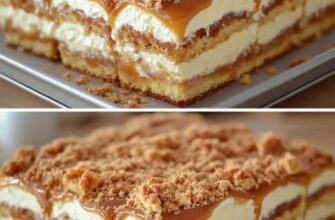
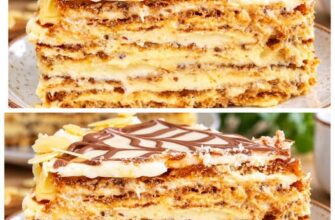
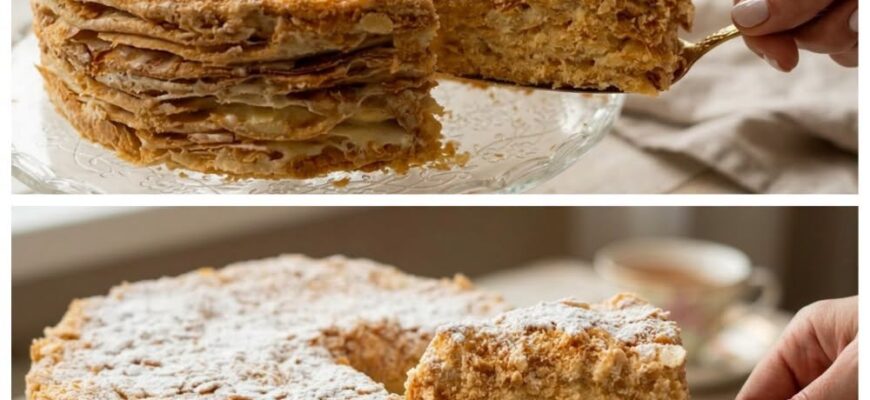
When you finally cut into the chilled cake, you should see numerous thin layers separated by generous ribbons of creamy filling.
Take a bite, and the pastry should crumble gently while the sweet buttercream melts into it.
That combination of flaky pastry and condensed milk cream is what makes this homemade Napoleon so memorable.
It is the kind of dessert that belongs on a family table rather than simply in a recipe book.
And once you taste it, you may understand why some childhood recipes never really disappear.
They simply wait for us to make them again.
Wikipedia Links for Common Kitchen Ingredients
- Flour – Wikipedia — general information about flour and its uses in cooking and food preparation.
- Wheat flour – Wikipedia — information about wheat flour and its different types.
- Eggs as food – Wikipedia — information about eggs as a food and their uses in cooking.
Recommended Recipes
- Delicious Vegetable Cakes with Carrot and Zucchini – a simple, flavorful and easy vegetable recipe made with carrot, zucchini and egg. Perfect for a quick breakfast, light lunch or tasty snack.
- Yeast-Free Cottage Cheese Buns with Apples – soft and delicious homemade buns made with cottage cheese and fresh apples. A quick and easy breakfast or snack that the whole family will enjoy.