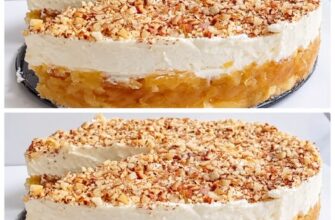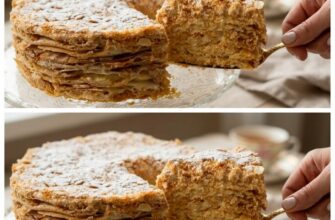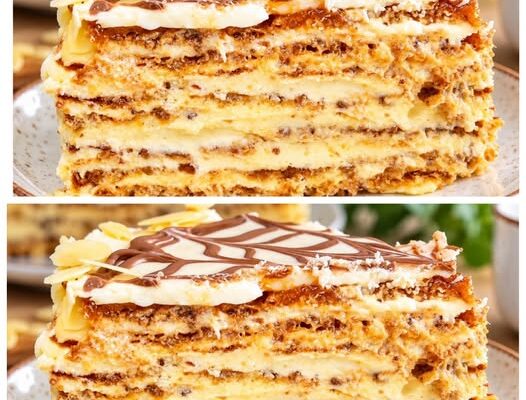

- Famous Austrian Masterpiece: Flourless Esterházy Cake with Nut Meringue Layers and Delicate Plombir Cream
- What Is Esterházy Cake?
- Why Make Esterházy Cake Without Flour?
- The Main Ingredients
- For the Nut Layers
- For the Plombir-Style Cream
- For the Topping
- Choosing the Nuts
- How Finely Should the Nuts Be Ground?
- Preparing the Egg Whites
- Folding in the Nuts
- Preparing the Layers
- Why Thin Layers Matter
- Baking the Nut Layers
- Making the Plombir-Style Cream
- Why the Custard Must Cool Before Adding Butter
- How to Make the Cream Taste Like Plombir
- Assembling the Esterházy Cake
- Why the Cake Needs to Rest
- The Famous Esterházy Decoration
- How to Make the Decorative Pattern
- What If You Do Not Want to Make the Classic Decoration?
- Common Mistakes When Making Flourless Nut Layers
- Overwhipping the Egg Whites
- Mixing Too Aggressively
- Grinding the Nuts into a Paste
- Spreading Uneven Layers
- Overbaking
- Common Custard Problems
- Lumpy Cream
- Runny Cream
- Split Buttercream
- Walnut Esterházy Cake
- Almond Esterházy Cake
- Hazelnut Variation
- Adding Chocolate to the Cream
- Coffee Variation
- Lemon-Nut Variation
- Why This Cake Is Ideal for Celebrations
- How to Get Clean Slices
- How the Cake Should Taste
- How to Store Esterházy Cake
- Can Esterházy Cake Be Made Ahead?
- Can the Cake Be Frozen?
- Is Esterházy Cake Gluten-Free?
- Can You Make It Less Sweet?
- Can You Make the Cake Smaller?
- Mini Esterházy Cakes
- Why Homemade Esterházy Cake Is Worth the Effort
- Tips for First-Time Bakers
- A Practical Preparation Schedule
- Morning
- Afternoon
- Evening
- Next Day
- What to Serve with Esterházy Cake
- A Cake for Nut Lovers
- Frequently Asked Questions
- What nuts are traditionally used in Esterházy cake?
- Does Esterházy cake contain flour?
- Can I use almonds instead of walnuts?
- Why did my nut layers become hard?
- How long should Esterházy cake rest?
- Can I use store-bought custard?
- Can I make the cake without the traditional chocolate pattern?
- Can I prepare it two days ahead?
- Is the cake very sweet?
- Can I make the cake with hazelnuts?
- Final Thoughts
- Wikipedia Links for Common Kitchen Ingredients
- Recommended Recipes
Famous Austrian Masterpiece: Flourless Esterházy Cake with Nut Meringue Layers and Delicate Plombir Cream
Few classic European desserts look as elegant as an Esterházy cake.
With its delicate nut-based layers, silky cream, and unmistakable decorative pattern on top, this cake has a reputation for being both luxurious and memorable. Yet despite its impressive appearance, the basic idea behind the dessert is surprisingly simple: finely ground nuts, airy layers, a smooth vanilla cream, and enough resting time for everything to come together.
This flourless Esterházy cake with nut layers and delicate plombir-style cream is inspired by the famous Central European confection. It is an especially appealing choice for anyone who loves nut desserts but wants to prepare a cake without traditional wheat flour.
The texture is completely different from an ordinary sponge cake.
Instead of relying on flour for structure, the layers are made primarily from whipped egg whites, sugar, and finely ground nuts. Once baked, they have a delicate, slightly chewy texture with a fragrant roasted-nut flavor.
Between the layers comes a creamy filling inspired by classic plombir ice cream: rich, vanilla-scented, smooth, and pleasantly milky.
The combination is wonderful.
The nutty layers bring character and texture.
The cream provides softness and richness.
A thin glaze on top creates the signature elegant finish.
And after several hours in the refrigerator, the cake becomes beautifully tender.
What Is Esterházy Cake?
Esterházy cake is a traditional Central European cake associated with the Esterházy family and the culinary culture of the former Austro-Hungarian Empire.
It is particularly known for its multiple thin nut layers, creamy filling, and decorative icing pattern.
Different recipes vary considerably.
Some use walnuts, while others use almonds or a combination of nuts.
Some versions contain flour, while others are prepared with nut-based layers that contain little or no traditional wheat flour.
The cream can also vary from one recipe to another.
That means there is no single homemade version that represents every Esterházy cake.
This recipe focuses on the qualities that make the dessert so recognizable and appealing: thin nut layers, a delicate vanilla cream, and an elegant finish.
Why Make Esterházy Cake Without Flour?
A flourless version has several advantages.
First, the flavor of the nuts becomes much more noticeable.
When flour is removed from the layers, the ground nuts play a much more important role.
They provide aroma, richness, and structure.
Second, the texture becomes wonderfully delicate.
The combination of whipped egg whites and finely ground nuts creates layers that are lighter than many traditional cake bases.
Third, it is a useful recipe for people who specifically want to prepare a cake without ordinary wheat flour.
Of course, if the cake needs to meet strict gluten-free requirements, every ingredient should be checked for appropriate gluten-free labeling and cross-contamination considerations.
The Main Ingredients
A classic homemade version can be made with relatively simple ingredients.
For the Nut Layers
- 6 egg whites
- 180 g granulated sugar
- 250–300 g finely ground walnuts
- 1 teaspoon vanilla sugar or vanilla extract
- A pinch of salt
Walnuts are particularly characteristic of many Esterházy-style recipes, but almonds can also be used.
For the Plombir-Style Cream
- 500 ml milk
- 4 egg yolks
- 100–120 g sugar
- 35–40 g cornstarch
- 1 teaspoon vanilla extract
- 150–180 g butter
- 100–150 ml heavy cream, optional
The cream should be smooth, rich, and distinctly vanilla-forward.
For the Topping
- 100–120 g powdered sugar
- 1–2 tablespoons lemon juice or water
- A small amount of melted dark chocolate
The classic decoration uses a light glaze with thin chocolate lines pulled into a distinctive pattern.
Choosing the Nuts
Walnuts are one of the most popular choices for Esterházy-style cakes.
Their flavor is rich but not excessively sweet, which creates a beautiful contrast with the creamy filling.
For the best flavor, use fresh walnuts.
Nuts that have been stored for a long time can develop a bitter or stale taste.
If possible, lightly toast the walnuts before grinding them.
Allow them to cool completely before using.
Toasting is optional, but it intensifies the aroma and makes the finished cake taste more luxurious.
How Finely Should the Nuts Be Ground?
This detail matters.
The nuts should be finely ground but not turned into nut butter.
If the pieces are too large, the layers may become difficult to spread evenly.
If the nuts are processed for too long, they can release their natural oils and become pasty.
Pulse them in short bursts.
The ideal texture resembles fine crumbs.
Preparing the Egg Whites
The structure of the flourless layers depends heavily on properly whipped egg whites.
Make sure the mixing bowl is completely clean and dry.
There should be no traces of grease.
Separate the eggs carefully.
Even a small amount of yolk can make whipping more difficult.
Begin beating the egg whites at medium speed.
Once they become foamy, gradually add the sugar.
Continue whipping until you have a glossy, stable meringue.
The mixture should hold its shape when the whisk is lifted.
Do not stop too early.
The egg whites need enough stability to support the ground nuts.
Folding in the Nuts
This is the moment when you need to be gentle.
Add the ground walnuts gradually.
Fold them into the meringue using a spatula.
Do not stir aggressively.
The goal is to distribute the nuts without destroying all the air incorporated into the egg whites.
The final mixture will naturally become heavier than plain meringue.
That is expected.
What you want is a smooth, spreadable nut batter that still contains some of the volume from the whipped whites.
Preparing the Layers
For a classic appearance, use a round cake template.
You can draw circles on parchment paper using the bottom of your cake pan as a guide.
Turn the parchment over so the pencil or marker does not touch the batter.
Spread the nut mixture evenly inside each circle.
The layers should be thin.
This is one of the defining characteristics of Esterházy cake.
Several thin layers are much more appropriate than two or three thick sponge layers.
Why Thin Layers Matter
Thin layers create the characteristic balance between cream and cake.
If the nut layers are too thick, the cake can feel heavy.
Thin layers allow the cream to become part of the overall texture.
After chilling, the cream slightly softens the nut layers.
The result is tender rather than dry.
Baking the Nut Layers
Bake the layers in a preheated oven until lightly golden.
The exact temperature and baking time depend on the thickness and your oven.
Thin layers usually require considerably less time than a traditional sponge cake.
Watch them carefully.
You want them cooked through but not deeply browned.
Overbaking can make them hard and brittle.
Remove each layer from the oven and allow it to cool.
Handle them gently.
They may be delicate while warm.
Making the Plombir-Style Cream
The cream is just as important as the nut layers.
Begin by combining the egg yolks, sugar, and cornstarch in a bowl.
Add a small amount of cold milk and whisk until smooth.
Heat the remaining milk in a saucepan.
Gradually incorporate the egg mixture while stirring continuously.
Cook over medium-low heat until the mixture thickens.
Do not stop stirring.
Once the custard becomes thick and smooth, remove it from the heat.
Add vanilla.
Allow it to cool completely.
Why the Custard Must Cool Before Adding Butter
This is one of the most important rules when making butter-based cream.
If the custard is too hot, it can melt the butter.
The final cream may become greasy or loose.
Allow the custard to cool to room temperature.
The butter should also be softened but not melted.
Beat the butter until light and creamy.
Then gradually add the cooled custard.
Continue beating until the cream becomes smooth and fluffy.
How to Make the Cream Taste Like Plombir
The classic plombir flavor is associated with a rich vanilla dairy taste.
To emphasize this character, use good-quality vanilla.
A small amount of heavy cream can also be incorporated into the finished buttercream.
The cream should remain stable enough to hold between the layers.
Do not add too much liquid.
The goal is creamy and silky, not runny.
Assembling the Esterházy Cake
Once the layers and cream are completely cool, assembly can begin.
Place the first nut layer on a flat serving surface.
Spread a thin, even layer of cream over it.
Place the next nut layer on top.
Repeat.
Continue until all layers are used.
The final layer should be placed carefully because it will become the visible top of the cake.
Use the remaining cream to cover the sides.
Try to create an even finish.
It does not have to be perfectly smooth because the final decoration will draw attention to the top.
Why the Cake Needs to Rest
Do not rush to serve Esterházy cake immediately after assembly.
The refrigerator is essential.
Place the assembled cake in the refrigerator for several hours.
Overnight is even better.
During this time, the cream softens the nut layers slightly.
The flavors blend.
The structure becomes more stable.
And the cake becomes easier to cut.
This resting period is what transforms the individual components into a unified dessert.
The Famous Esterházy Decoration
The decorative pattern is one of the most recognizable features of this cake.
Traditionally, the top is covered with a light glaze.
Thin lines of melted chocolate are then drawn across the surface.
A toothpick or thin skewer is used to pull through the chocolate lines in alternating directions.
This creates a feathered or web-like pattern.
It looks sophisticated but is surprisingly easy once you understand the technique.
How to Make the Decorative Pattern
Spread the light glaze over the chilled cake.
Work fairly quickly because the glaze should remain smooth.
Place several thin parallel lines of melted chocolate across the top.
Then use a toothpick to draw lines perpendicular to the chocolate.
Alternate the direction of the toothpick between lines.
The chocolate will stretch into the glaze and create the classic pattern.
You do not need perfect symmetry.
In fact, a slightly handmade appearance can make the cake look even more authentic.
What If You Do Not Want to Make the Classic Decoration?
That is completely fine.
The cake can be decorated more simply.
Try:
- chopped walnuts
- toasted almond flakes
- powdered sugar
- white chocolate
- dark chocolate shavings
- caramelized nuts
- thin chocolate drizzle
The flavor will remain delicious even without the traditional pattern.
Common Mistakes When Making Flourless Nut Layers
Overwhipping the Egg Whites
Extremely dry, overwhipped egg whites can be difficult to combine with nuts.
Aim for a glossy, stable meringue.
Mixing Too Aggressively
Vigorous mixing can remove too much air.
Fold gently.
Grinding the Nuts into a Paste
Overprocessing releases the natural oils from the nuts.
Pulse rather than continuously blending.
Spreading Uneven Layers
If one part is much thicker than another, it will bake unevenly.
Take your time when spreading the batter.
Overbaking
Thin layers can become dry surprisingly quickly.
Watch them carefully.
Common Custard Problems
Lumpy Cream
This usually happens when the custard is not whisked continuously or when the starch is not dissolved properly.
Mix the cornstarch with cold liquid before heating.
Runny Cream
The custard may not have been cooked long enough, or the butter may have been added before the custard cooled.
Make sure the custard reaches a proper thick consistency.
Split Buttercream
Temperature differences can cause buttercream to look curdled.
If this happens, continue beating.
Sometimes gently warming the outside of the bowl can help the mixture come back together.
Walnut Esterházy Cake
For a classic nutty flavor, use walnuts exclusively.
Lightly toast them before grinding.
The toasted aroma becomes especially noticeable after the cake has chilled.
Walnuts also provide a pleasant contrast to the sweet vanilla cream.
Almond Esterházy Cake
Almonds create a slightly more delicate flavor.
Use finely ground blanched almonds for a smooth texture.
A small amount of almond extract can intensify the aroma, but use it sparingly.
Too much almond extract can overpower the cream.
Hazelnut Variation
Hazelnuts are another delicious alternative.
Toast them until fragrant, cool completely, and remove loose skins before grinding.
Hazelnut layers pair particularly well with chocolate decoration.
This version feels especially rich and festive.
Adding Chocolate to the Cream
If you love chocolate, you can turn the filling into a chocolate-nut cream.
Melt a small amount of dark chocolate and allow it to cool slightly.
Fold it into the finished cream.
Do not add hot chocolate directly to the buttercream.
The chocolate should be cool enough not to melt the butter.
Coffee Variation
A little coffee can add depth to the cream.
Dissolve a small amount of instant espresso powder in the cooled custard.
Coffee and walnuts make a wonderful combination.
This version is especially good for adults who enjoy less sweet desserts.
Lemon-Nut Variation
If you want a fresher cake, add finely grated lemon zest to the cream.
The citrus aroma balances the richness of the buttercream.
Lemon also works beautifully with walnuts.
Why This Cake Is Ideal for Celebrations
Esterházy cake has a naturally festive appearance.
The multiple layers immediately make it look special.
The decorative top gives it a professional pastry-shop quality.
And because the cake needs to rest overnight, it is actually very convenient for entertaining.
Prepare it the day before.
Refrigerate it.
Decorate if desired.
Then slice and serve when your guests arrive.
How to Get Clean Slices
A sharp knife is essential.
For the cleanest cuts, dip the knife into hot water.
Dry it carefully.
Slice through the cake.
Clean and warm the knife again between cuts if necessary.
Because the cake contains several delicate layers, avoid pressing down too hard.
Let the knife do the work.
How the Cake Should Taste
A well-made Esterházy cake should have several layers of flavor.
First comes the roasted nuttiness.
Then the creamy vanilla filling.
The sweetness should be noticeable but not overwhelming.
The thin glaze adds another layer of texture.
The overall effect should be rich but balanced.
After refrigeration, the nut layers become softer and the cream becomes beautifully integrated into the cake.
How to Store Esterházy Cake
Because the cake contains a dairy-based cream, it should be refrigerated.
Keep it covered to prevent it from absorbing odors from the refrigerator.
It is generally best enjoyed within several days.
In fact, many people find that the cake tastes even better on the second day because the layers have had more time to absorb some of the cream.
Can Esterházy Cake Be Made Ahead?
Yes.
This is one of its greatest advantages.
You can prepare it the day before serving.
The cake actually benefits from resting overnight.
If you are preparing it for a celebration, making it in advance can make the final day much less stressful.
Can the Cake Be Frozen?
The nut layers themselves can generally be prepared ahead and frozen carefully.
However, finished cakes containing custard-based buttercream may change texture after freezing and thawing.
For the best quality, refrigeration is usually preferable.
If you must freeze the completed cake, wrap it very well and thaw it slowly in the refrigerator.
Is Esterházy Cake Gluten-Free?
A flourless recipe does not automatically guarantee that the entire dessert is gluten-free.
The ingredients themselves may be naturally gluten-free, but products such as powdered sugar, vanilla products, chocolate, or other packaged ingredients should be checked if gluten avoidance is essential.
Cross-contact during preparation can also matter.
Can You Make It Less Sweet?
Yes.
The amount of sugar can be adjusted carefully.
Keep in mind that the sugar is not only responsible for sweetness in the nut layers; it also contributes to the structure of the meringue.
Therefore, reducing sugar too aggressively can affect the texture.
It is generally easier to adjust sweetness in the cream and decoration than to drastically reduce the sugar in the nut layers.
Can You Make the Cake Smaller?
Absolutely.
The recipe can be scaled down.
A smaller cake is ideal when you are cooking for a family rather than a large gathering.
You can also make a rectangular version instead of a round cake.
The presentation will be different, but the flavor remains the same.
Mini Esterházy Cakes
For special occasions, you can make individual mini cakes.
Bake larger sheets of the nut mixture and cut them into small circles or squares.
Layer them with cream.
Chill thoroughly.
Decorate each individual cake with a small amount of glaze and chocolate.
These miniature versions are beautiful on a dessert table.
Why Homemade Esterházy Cake Is Worth the Effort
At first glance, the recipe may look more complicated than an ordinary homemade cake.
There are several thin layers.
The cream requires careful preparation.
The decoration takes a little patience.
But the actual techniques are straightforward.
The most important thing is to work carefully rather than quickly.
Once you have made the cake once, the process becomes much easier.
And the final result is something that feels genuinely special.
Tips for First-Time Bakers
If this is your first Esterházy cake, focus on three things.
First, make the nut layers evenly thin.
Second, make sure the custard is completely cool before combining it with butter.
Third, give the finished cake enough time in the refrigerator.
Those three details have a greater impact on the final result than elaborate decoration.
A Practical Preparation Schedule
To make the process easier, divide it into stages.
Morning
Prepare and bake the nut layers.
Allow them to cool completely.
Afternoon
Prepare the custard.
Cool it thoroughly.
Whip the butter and make the cream.
Evening
Assemble the cake.
Cover it and refrigerate overnight.
Next Day
Decorate the chilled cake.
Cut into slices.
Serve.
This schedule is particularly convenient before holidays or celebrations.
What to Serve with Esterházy Cake
Because the cake is rich and creamy, simple drinks work best.
Serve it with:
- black coffee
- espresso
- cappuccino
- black tea
- green tea
- lightly sweetened herbal tea
For a special occasion, a small cup of strong coffee creates a beautiful contrast with the sweet vanilla cream.
A Cake for Nut Lovers
If you genuinely love nuts, this dessert is difficult to resist.
The nut layers are not merely a supporting ingredient.
They are one of the main flavors.
Every bite contains the aroma of toasted nuts, balanced by the smooth cream.
That is what gives Esterházy cake its distinctive character.
Frequently Asked Questions
What nuts are traditionally used in Esterházy cake?
Walnuts are commonly associated with Esterházy-style cake, although recipes vary and almonds or other nuts can also be used.
Does Esterházy cake contain flour?
Recipes differ. This version is designed specifically around flourless nut-based layers.
Can I use almonds instead of walnuts?
Yes. Almonds create a lighter, more delicate flavor.
Why did my nut layers become hard?
They may have been baked too long or spread too thin. Remember that the layers will soften somewhat after absorbing moisture from the cream.
How long should Esterházy cake rest?
Several hours are recommended, while overnight refrigeration usually gives the best texture.
Can I use store-bought custard?
You can, but homemade custard gives the cream a more distinctive vanilla flavor and allows you to control the sweetness and thickness.
Can I make the cake without the traditional chocolate pattern?
Yes. You can decorate it with nuts, chocolate shavings, powdered sugar, or another simple topping.
Can I prepare it two days ahead?
It can be prepared in advance and refrigerated, but for the best texture and freshness, serving it within a few days is preferable.
Is the cake very sweet?
It is a rich dessert, but the sweetness can be balanced by using moderately sweet cream and slightly bitter dark chocolate for the decoration.
Can I make the cake with hazelnuts?
Yes. Toasted hazelnuts create a delicious variation and pair especially well with chocolate.
Final Thoughts
A beautifully prepared flourless Esterházy cake with nut layers and plombir-style cream is the kind of dessert that turns an ordinary meal into a celebration.
It has everything you want from an impressive homemade cake.
The layers are thin and fragrant.
The nuts provide depth and character.
The cream is smooth, rich, and delicately vanilla-scented.
The decorative top adds an unmistakably elegant finish.
And although the cake requires patience, it does not require complicated pastry techniques.
The secret is simply to take your time.
Whip the egg whites properly.
Fold in the nuts gently.
Bake the layers carefully.
Prepare a smooth custard.
Cool everything before assembling.
Then allow the finished cake to rest overnight.
The refrigerator does much of the final work.
By the next day, the once-crisp nut layers have softened slightly, the cream has settled between them, and the entire cake has developed the tender texture that makes layered desserts so irresistible.
This is also a recipe that rewards creativity.
Use walnuts for a classic character, almonds for a lighter version, or hazelnuts for a deeper roasted flavor.
Add lemon zest for freshness, coffee for complexity, or a little chocolate for extra indulgence.
However you prepare it, the result remains a beautiful example of how a few carefully chosen ingredients can become something truly memorable.
If you have never made Esterházy cake at home, this flourless version is a wonderful place to start. It may look like a dessert from an elegant European pastry shop, but with a little patience, you can create it in your own kitchen.
Wikipedia Links for Common Kitchen Ingredients
- Flour – Wikipedia — general information about flour and its uses in cooking and food preparation.
- Wheat flour – Wikipedia — information about wheat flour and its different types.
- Eggs as food – Wikipedia — information about eggs as a food and their uses in cooking.
Recommended Recipes
- Delicious Vegetable Cakes with Carrot and Zucchini – a simple, flavorful and easy vegetable recipe made with carrot, zucchini and egg. Perfect for a quick breakfast, light lunch or tasty snack.
- Yeast-Free Cottage Cheese Buns with Apples – soft and delicious homemade buns made with cottage cheese and fresh apples. A quick and easy breakfast or snack that the whole family will enjoy.